

How Often Should a Virginia Restaurant Have Its Commercial Range Hood Serviced?
An annual inspection checklist for restaurant owners covering grease buildup, fan motor amperage draw, bearings, belts, and loose wiring
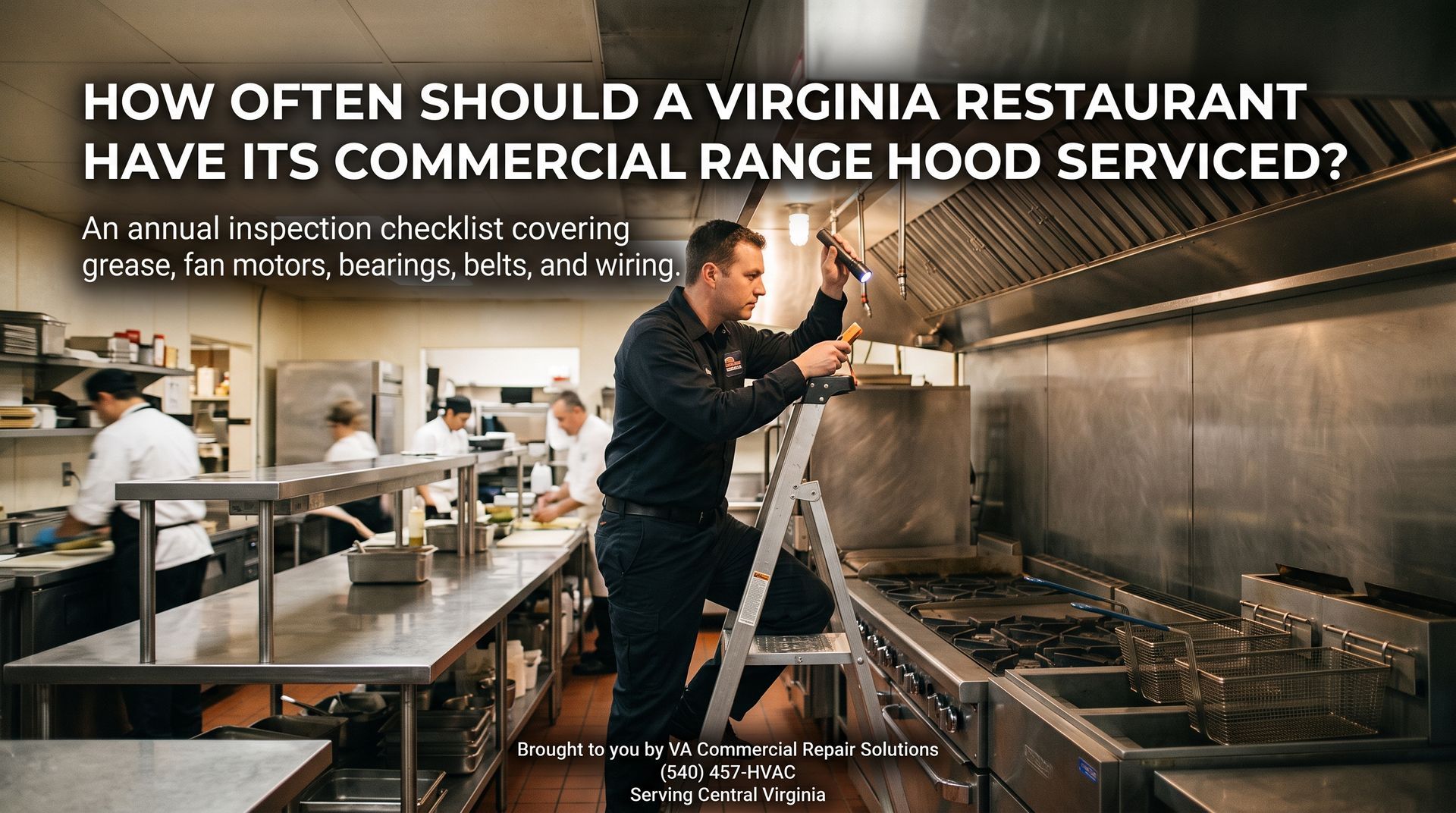
Short answer: A Virginia restaurant should have its commercial range hood and exhaust fan system professionally inspected and serviced by a licensed contractor like VA Commercial Repair Solutions at least once a year. Hoods over heavy-duty cooking, such as fryers, charbroilers, and 24-hour operations, often need service twice a year. Grease cleaning follows its own, more frequent schedule. Annual commercial range hood maintenance in Virginia catches small mechanical problems before they become fires, failed health or fire inspections, or an emergency shutdown during your busiest week.
Why Range Hood Maintenance Matters So Much
Your commercial range hood is a safety system as much as a piece of kitchen equipment. A Type I hood captures heat, grease-laden vapor, and smoke from fryers, griddles, and ranges and exhausts them outside. The exhaust fan on the roof does the heavy lifting, and a make-up supply air fan replaces the air that was removed.
When any part of that system fails, three things can happen:
- Grease accumulates in the hood, filters, and ductwork, which is the fuel for a kitchen fire.
- Airflow drops, so heat and smoke stay in your kitchen and dining room.
- The fan motor works harder, overheats, and eventually burns out, usually at the worst possible moment.
A faulty system can also leak grease, stain walls and furniture, and hurt your reputation. A yearly service visit costs far less than any of those outcomes.
Hood Cleaning vs. Mechanical Service: Know the Difference
Restaurant owners often mix up two separate tasks.
Hood and duct cleaning removes grease from the hood, filters, and ducts. Fire codes in Virginia follow national standards (NFPA 96) that set cleaning frequency based on how much and what kind of cooking you do. Busy, high-volume kitchens need cleaning more often than low-volume ones, and your local fire marshal has the final say on what applies to your building.
Mechanical service inspects the hood’s working parts: the exhaust fan, the make-up air fan, the motors, the belts, the bearings, and the electrical connections. This is the work a licensed mechanical contractor does, and it is the focus of this article.
Cleaning keeps grease from building up. Mechanical service keeps the equipment that moves the air in working order. You need both.
How Often Should You Schedule Range Hood Service?
Use these guidelines as a starting point:
- Once a year (minimum): Most restaurants with moderate cooking volume.
- Twice a year: Kitchens with fryers, charbroilers, woks, or long operating hours, and any kitchen where you notice grease on the roof or around the fan.
- Immediately: Any time the fan is noisy, a control panel goes dark, or the hood is not pulling air the way it used to.
Also ask your insurance carrier and local fire marshal whether they require documented service records. Keeping a dated inspection report on file helps if you are ever audited.
The Annual Commercial Range Hood Inspection Checklist
A thorough service visit should cover at least the following.
1. Grease Buildup
A technician should look at the hood interior, filters, grease cups, the roof curb, and the area around the exhaust fan. Heavy grease on the fan housing or roof is a warning sign that grease is escaping the system, and it is a fire risk. Damaged or missing filters should be replaced, since they are your first line of defense.
2. Fan Motor Amperage Draw
This is one of the most valuable checks, and one many owners have never heard of. A technician measures how much electrical current the exhaust fan motor is drawing and compares it to the manufacturer’s specification on the motor nameplate.
- High amperage can mean the motor is straining from a failing bearing, a belt that is too tight, a clogged wheel, or an electrical issue.
- Low amperage can point to a slipping belt, a damaged blower wheel, or restricted airflow.
Catching an abnormal reading early lets you repair a motor, or replace a single component, before the motor fails completely.
3. Bearings
Motor and fan bearings wear out over time. Worn bearings cause humming, clunking, and grinding noises, along with extra heat and vibration. A technician should check each bearing and lubricate it where the design calls for it. Proper lubrication extends motor life and helps prevent downtime.
4. Belts
On belt-driven fans, the belt transfers power from the motor to the blower wheel. A technician should check belts for cracking, glazing, fraying, and correct tension. A loose belt slips and reduces airflow. An overtight belt overloads bearings and shortens motor life. Belts are inexpensive and are one of the easiest ways to avoid a breakdown.
5. Loose Wiring and Electrical Components
Vibration, heat, and age loosen electrical connections. A technician should inspect wiring, disconnects, contactors, and the control panel for loose terminals, scorching, or damaged insulation. Shorting or loose wires are a safety hazard, and a control panel that goes dark or smells like burning electrical components needs attention right away.
6. Make-Up Supply Air Fan
Do not skip this one. If your exhaust system removes a large volume of air, the make-up air fan has to replace it. When it fails, your kitchen can become uncomfortable, doors can be hard to open, and the exhaust fan cannot perform properly. The same amperage, belt, bearing, and wiring checks apply.
Warning Signs Your Range Hood Needs Service Now
Do not wait for the annual visit if you notice any of the following:
- The exhaust fan is not pulling air, or smoke and heat linger in the kitchen
- Humming, clunking, rattling, or grinding from the roof or hood
- The make-up air fan is not blowing air in
- The control panel is dark or smells like burning electronics
- Grease dripping, pooling, or staining near the hood or on the roof
- A noticeable rise in kitchen temperature during service
Repair Before Replacement
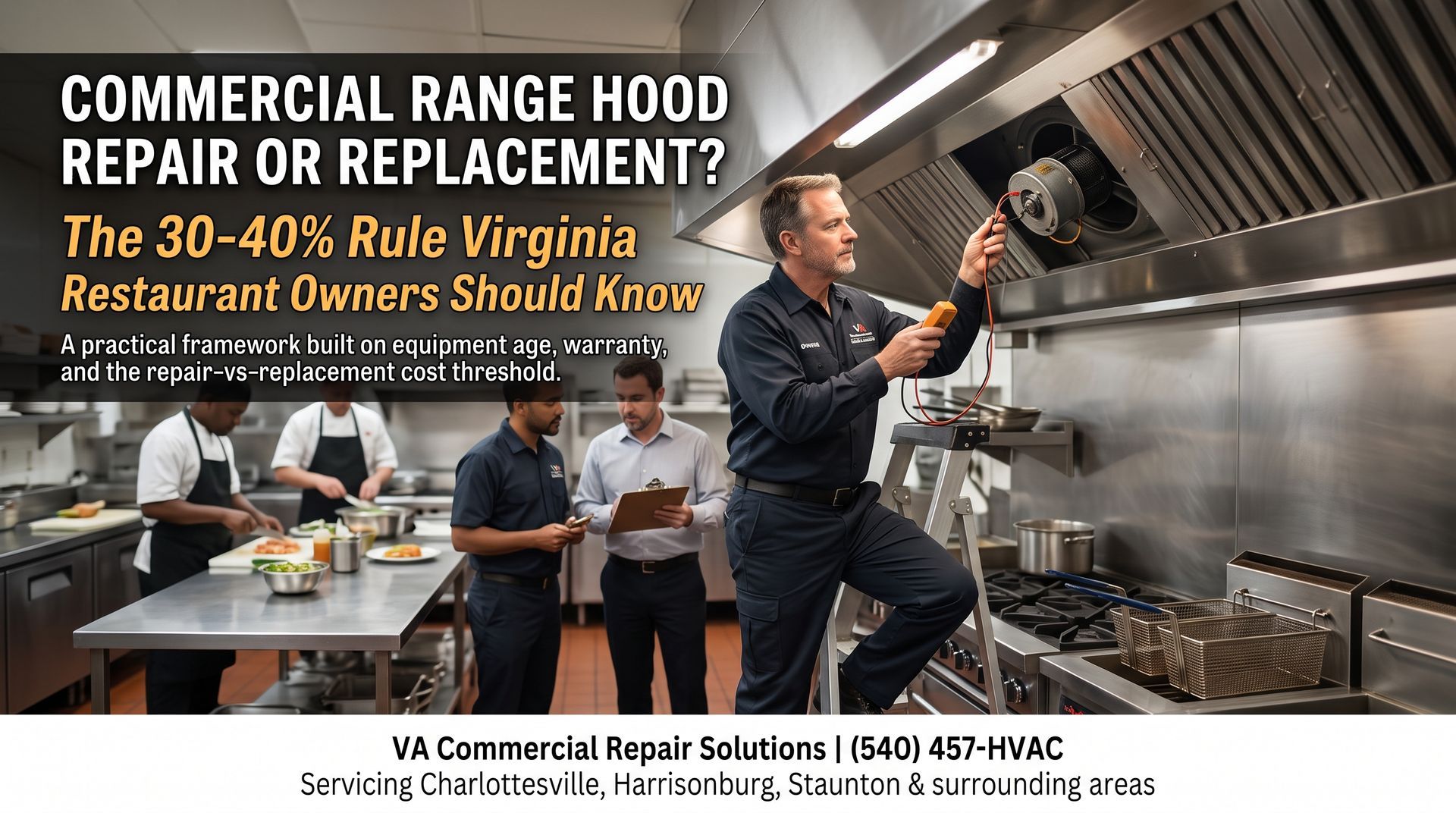
Many failures that look like a dead system turn out to be a worn belt, a bad bearing, a failed capacitor, or a loose connection. As a rule of thumb, if a repair is expected to cost 30-40% of replacement, it makes sense to consider replacing a component rather than the whole system. Commercial range hood components commonly last 10-20 years when properly installed and maintained, which is why regular service pays for itself. Also check whether your equipment is still under manufacturer warranty before paying for any repair.
Choose a Qualified Virginia Mechanical Contractor
Servicing a commercial hood system takes specialized equipment and knowledge of fire and mechanical codes. Look for a contractor who is licensed and insured, provides a written estimate and receipt, and pulls required permits for any installation work.
VA Commercial Repair Solutions is a Class A licensed mechanical, HVAC, and electrical contractor serving Charlottesville, Harrisonburg, Staunton, and surrounding Virginia communities. The company services all brands of commercial range hoods and exhaust fans, and offers 24/7 emergency service and free quotes.
Frequently Asked Questions
How often should a commercial range hood be serviced in Virginia?
At least once a year, and twice a year for high-volume or heavy-grease cooking operations.
Is range hood service the same as hood cleaning?
No. Cleaning removes grease from the hood and ducts. Service inspects and maintains the fans, motors, belts, bearings, and wiring.
What is a fan motor amperage check?
A technician measures the electrical current the motor draws and compares it to the manufacturer’s specification to spot problems before the motor fails.
What happens if I skip maintenance?
You risk grease-related fires, failed inspections, higher energy use, and unexpected downtime.
Schedule Your Annual Inspection
Do not wait for a breakdown or an inspector’s notice. Call VA Commercial Repair Solutions at (540) 457-HVAC (4822) to schedule your annual commercial range hood inspection and get a free quote.
Note: Cleaning frequency and inspection requirements vary by cooking type and jurisdiction. Confirm requirements for your location with your local fire marshal.